Walk-In Cooler Coil Cleaning and Refrigerated Warehouse Cleaning
Moderate temperature evaporator coils need thorough cleaning to hold temperature and hold efficiency.
Lower Energy Consumption
Clean heat transfer surfaces improve system efficiency.
Reduced Operating Costs
Use less energy and extend equipment life.
More Sustainable Operations
Lower energy use means a smaller environmental impact.
Reliable Performance
Keep your cooling systems running at their best.
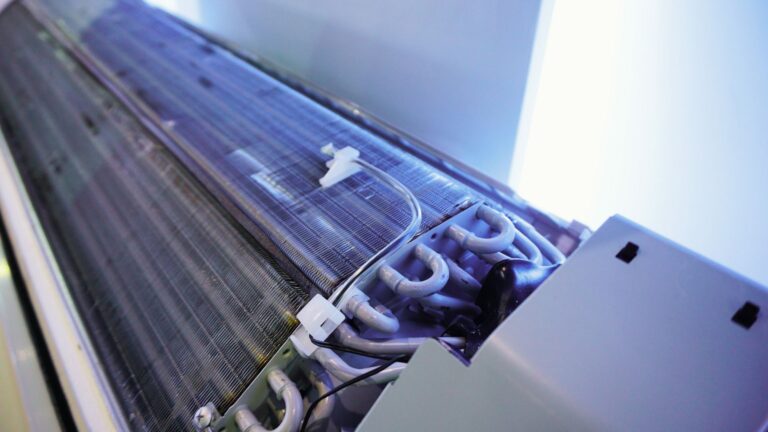
Refrigerated spaces move enormous volumes of air across their evaporator coils, and everything in that air ends up on the coil. Dust, packaging fiber, product residue and moisture, cycling through freeze and thaw, day after day.
The coil gets insulated by its own fouling. Heat transfer drops. The system runs longer to hold setpoint, and eventually it stops holding setpoint at all. In a warehouse full of products with a temperature requirement, that is not an efficiency problem anymore.
Cleaning the evaporators in your walk-in coolers and refrigerated warehouse is one of the most direct ways to cut refrigeration energy cost and extend equipment life. It is also one of the most commonly deferred.
What it delivers
- Lower refrigeration energy costs and a measurable return on the work
- Reliable temperature control and reduced product risk
- Less ice buildup and fewer defrost problems
- Reduced conditions for bacterial growth in the space
- Longer compressor and equipment life
- Documentation that shows you take system hygiene and efficiency seriously
You find out about problems before they become emergencies
Our technicians document what they find. Detailed service reports mean equipment deficiencies get flagged while they are still repairs, not failures.
That distinction is the whole argument. A failing fan motor found during a scheduled cleaning is a scheduled repair. The same motor found on a Saturday in August, with a warehouse full of product warming up, is a different conversation.
Our service reports and equipment certificates are also the documentation you want on hand if you are ever audited on food safety or system hygiene. Do not find out you needed them at the point somebody asks.
Small spaces are not a problem
Crowded walk-ins, dairy coolers and tight back-of-house refrigeration are routine for us. We work around your schedule and your stock so our presence does not cost you a shift.
Who we work with
We work with businesses and facilities that depend on reliable refrigeration every day. From restaurants and grocery stores to refrigerated warehouses, food processing facilities and institutional kitchens, we help keep cooling systems clean, efficient and performing as they should.

Refrigerated warehouses and distribution centers
High-volume cold storage with continuous air movement and continuous coil loading.

Grocery and supermarket
Back-of-house walk-ins, prep coolers and freezer rooms running every hour the store is open and most of the hours it is not.

Food processing
Production and holding refrigeration where temperature control is a food safety control point, not a convenience.

Institutional and hospitality kitchens
Hospitals, universities, hotels and large-scale food service where walk-in reliability drives the whole operation.
Why choose us
The hard part is cleaning without shutting down your operation.
We work around your schedule, your inventory and your shift patterns. Crowded coolers, active warehouses and tight windows are the normal conditions for this work, not the exception, and we plan for them.
FAQS
Questions About Walk-In Cooler & Refrigerated Warehouse Cleaning
How often should walk-in cooler coils be cleaned?
Annually at minimum for most walk-ins. High-volume operations, produce and dairy coolers, and any space with heavy packaging or product debris in the air often need twice-yearly cleaning. Refrigerated warehouses with continuous throughput usually justify a more frequent schedule.
Why is my walk-in cooler not holding temperature?
A fouled evaporator coil is one of the most common causes and one of the most commonly overlooked. Buildup insulates the coil so it cannot absorb heat effectively, and the system runs longer and longer until it can no longer reach setpoint. Other causes include low refrigerant charge, failing fan motors, defrost problems and door seal failures. A cleaning visit will identify most of them.
What causes ice buildup on evaporator coils?
Restricted airflow across a fouled coil, defrost system problems, excess moisture entering the space, and door seals that are not sealing. Fouling and defrost issues are the most common, and both are found during a proper cleaning.
Does coil cleaning actually lower refrigeration energy costs?
Yes. A fouled evaporator forces the system to run longer to move the same heat, and refrigeration is typically one of the largest electrical loads in a facility that has it. Restoring heat transfer reduces runtime directly.
Will you have to shut down the cooler?
The unit is offline briefly during cleaning. We plan around your operating schedule, work section by section where possible, and size the visit so temperature is not at risk. Tell us your constraints when you request the quote.
Do you clean refrigerated warehouses and distribution centers?
Yes, regularly. Large refrigerated facilities are some of our best candidates for this service because of how much airborne debris circulates through them and how much energy their refrigeration systems consume.
Do you provide documentation for food safety audits?
Yes. Every job produces a service report documenting the equipment cleaned, its condition and any deficiencies found. Clients use these records for food safety audits, internal quality programs and utility rebate submissions.