
Commercial Evaporator Coil Cleaning and AHU Cleaning
Every cubic foot of air in your building passes through that coil.
Lower Energy Consumption
Clean heat transfer surfaces improve system efficiency.
Reduced Operating Costs
Use less energy and extend equipment life.
More Sustainable Operations
Lower energy use means a smaller environmental impact.
Reliable Performance
Keep your cooling systems running at their best.
An air handling unit pulls the entire volume of air in your building across its evaporator coil, over and over, all day. Everything in that air that does not make it through the filters ends up in the coil.
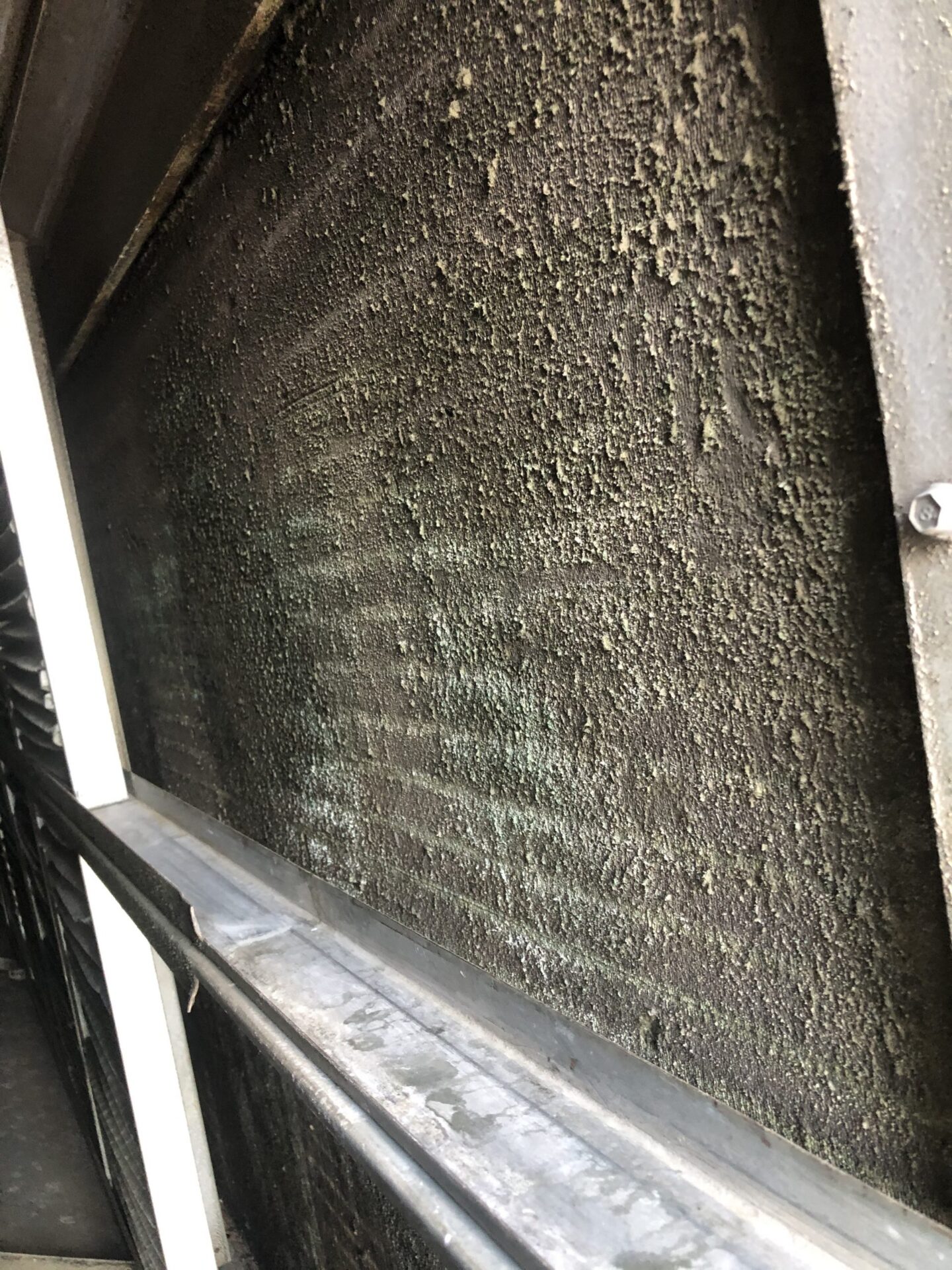
That matters twice. Mechanically, a loaded coil restricts airflow and kills heat transfer, so the system runs longer and costs more to deliver less. Biologically, the coil is wet, dark and full of organic material, which makes it one of the better places in your building for mold and bacteria to establish.
Then the fan pushes air across it and distributes the result to every occupied space you serve.
Evaporator coil cleaning addresses both problems at once. It is one of the few maintenance items that lowers the energy bill and improves the air people breathe in the same visit.
What it delivers
- Better indoor air quality throughout the served space
- Restored airflow and heat transfer across the coil
- Lower operating costs and a measurable return on the work
- Reduced conditions that contribute to sick building complaints
- Better humidity control, which limits mold growth downstream
- Documented condition for maintenance and compliance records
Our process
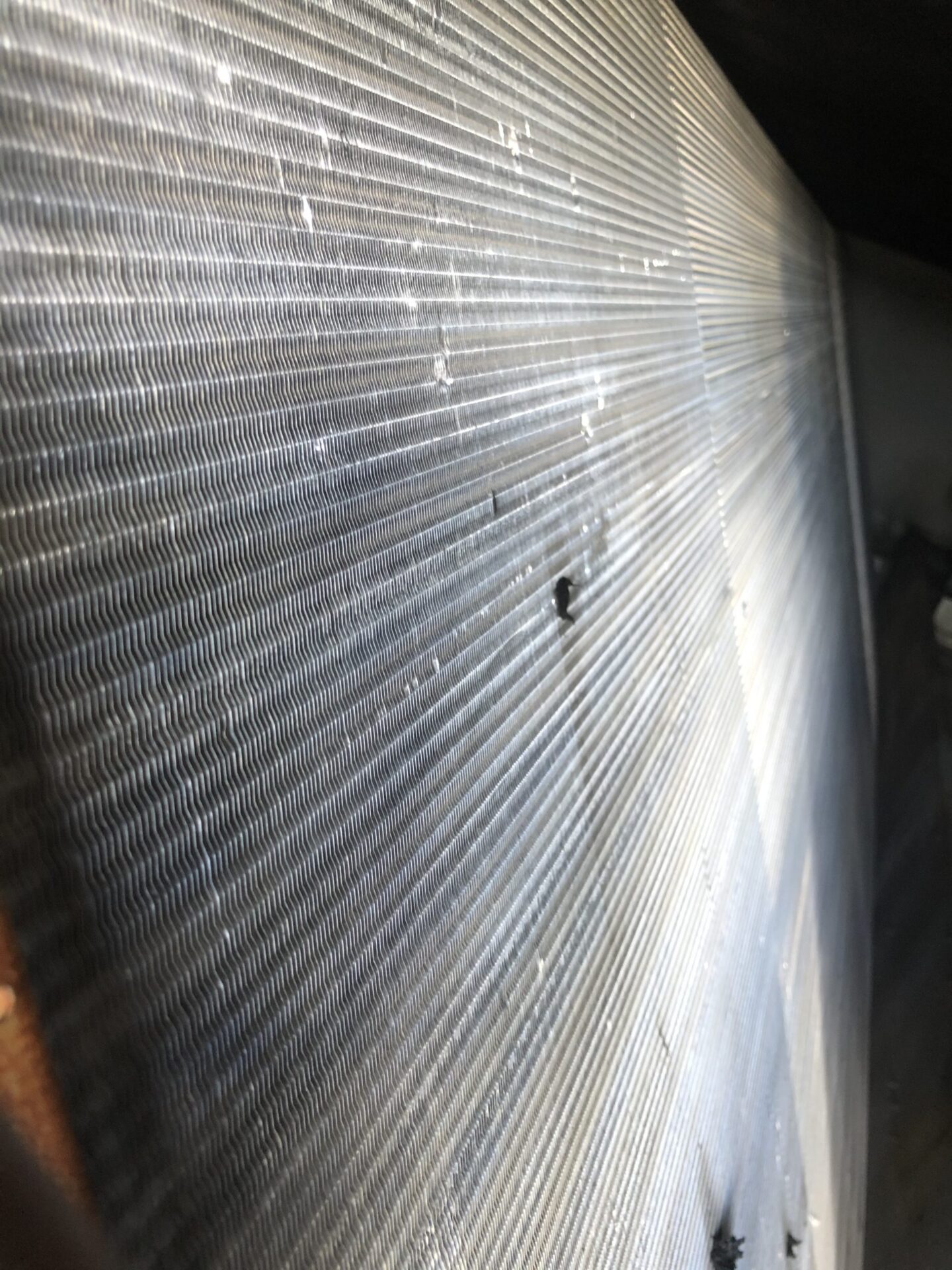
Coils are deep, densely packed and easy to clean badly. Spraying the face of a coil cleans the face of a coil. The fouling that actually matters is in the middle of the pack, and it stays there.
Our HVAC evaporator coil cleaning works the full depth of the coil using controlled pressure and high water flow, moving contamination out rather than driving it further in. Water only, which means no chemical residue sitting in the airstream that feeds your occupied spaces.
We work indoor AHUs and rooftop units, and we schedule around occupancy so the building keeps running. Air handler maintenance on a regular interval keeps the coil from ever reaching the state where a deep clean becomes a major job.
Who we work with
We work with facilities that depend on reliable refrigeration and cooling to protect products, control operating costs, and keep critical operations running. From grocery stores and food processing plants to manufacturing facilities and commercial buildings, we clean the systems that work hardest.

Hospitals, clinics and research laboratories
Air quality is a patient safety and research integrity issue. These facilities also carry the strictest documentation requirements of anyone we serve.

Schools and universities
Dense occupancy, tight budgets and rising expectations about indoor air quality. Coil cleaning addresses all three.

Office buildings and commercial real estate
Tenant comfort complaints and air quality questions land on the property manager. Clean coils are the cheapest answer to both.

Manufacturing and controlled environments
Where air quality affects product, process or a controlled classification, commercial AHU condition is a production issue rather than a facilities one.
Why choose us
Most of this work happens in occupied buildings, and that changes the job.
We schedule around your operation, work clean, and leave no chemical residue in a system that feeds air to people. Northeast Coil will partner with you to make sure your employees and your customers are in a safe environment, and to give you the records that prove you took it seriously.
FAQS
Questions About Evaporator Coil & AHU Cleaning
How often should air handler coils be cleaned?
Annual inspection with cleaning as needed is the general baseline for commercial AHUs. Buildings with high occupancy, heavy outdoor air loads, poor filtration or dusty environments often need it more frequently. Healthcare and laboratory facilities frequently clean on a set schedule regardless of visual condition because their documentation requirements demand it.
Does coil cleaning improve indoor air quality?
Yes. A fouled evaporator coil accumulates organic material in a consistently wet environment, which supports microbial growth. Because all supply air passes across that coil, whatever is growing there gets distributed through the building. Removing it removes the source.
What is sick building syndrome?
A pattern where occupants report symptoms like headaches, fatigue, irritated eyes and respiratory complaints that improve when they leave the building. Causes are usually a combination of factors including ventilation, contaminant sources and humidity. HVAC hygiene, including coil condition, is one contributor that is straightforward to address.
Can coils be cleaned in place, or do they have to be pulled?
The vast majority are cleaned in place. Our process cleans the full depth of the coil without removal, which avoids the cost, downtime and reinstallation risk of pulling a coil.
What is the difference between a condenser coil and an evaporator coil?
An evaporator coil absorbs heat from the air moving across it, which is what cools your building. A condenser coil rejects that heat outside. Both foul, both cost you efficiency when they do, and both need cleaning, but they sit in different environments and pick up different contamination.
How do I know if our AHU coil is dirty?
Reduced airflow at the diffusers, longer runtimes, rising energy use, humidity that will not come down, musty odors in the supply air, occupant complaints clustered on one air handler, or visible buildup on the coil face. If you can see fouling on the face, the interior is worse.
Will you have to shut down the air handler?
The unit is offline during the cleaning itself. We schedule around occupancy, including nights and weekends, and work unit by unit so the building is never entirely without conditioned air.
Do you use chemicals in occupied buildings?
No. Our process is water-based, which is a significant advantage in occupied buildings and in facilities where chemical cleaning is restricted. Nothing is left in the airstream.