
Chiller Tube Cleaning
Lower Energy Consumption
Clean heat transfer surfaces improve system efficiency.
Reduced Operating Costs
Use less energy and extend equipment life.
More Sustainable Operations
Lower energy use means a smaller environmental impact.
Reliable Performance
Keep your cooling systems running at their best.
A chiller does its work through the walls of its tubes. Anything coating those walls is insulation between the refrigerant and the water, and it degrades the machine gradually enough that nobody notices until the plant cannot make its load on a design day.
Scale from mineral deposit. Biofilm from biological growth in the condenser loop. Silt and mud settling in the tubes. Corrosion products. Each adds thermal resistance, raises approach temperature and forces the compressor to work harder for the same tonnage.
Chemical cleaning dissolves some of it. Mechanical brush cleaning removes it, including deposits chemistry does not touch, and without the corrosion risk that comes with running acid through your tube bundle.
Proper chiller tube cleaning, along with chiller condenser tube cleaning and plate heat exchanger maintenance, is not optional on a chilled water system. It is what keeps the most expensive machine in the building operating the way it was specified.
What you get out of it
- Lower energy consumption for the same cooling output
- Recovered capacity on plants that have been struggling to hold load
- Reduced scale, biological growth and tube erosion
- Early identification of tube damage before it becomes a failure
- Longer service life on equipment that is expensive to replace
- Documented condition for maintenance and capital planning records
Our process
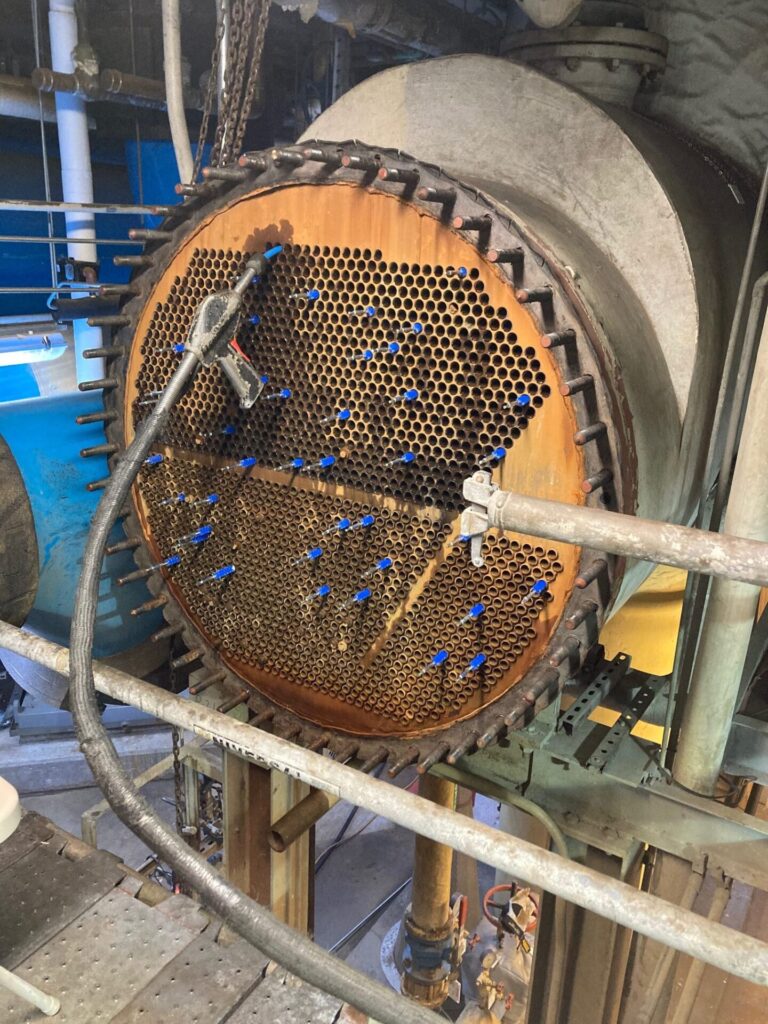
We mechanically clean the tube bundle, matching brush type to tube material and to the kind of deposit we are dealing with. Using the wrong brush on the wrong tube is how tubes get damaged, and it is the most common way this job gets done badly.
We document tube condition as we go. If we find erosion, pitting or damage, you hear about it from us while it is still a maintenance item rather than from your chiller when it fails.
Who we work with

Pharmaceutical and life sciences
Process cooling here is tied to product quality and validated environmental conditions. Chiller performance is not a comfort issue.

Hospitals and healthcare campuses
Central plants run continuously and cannot afford capacity loss. Chiller efficiency affects both operating budget and resilience.

Manufacturing and power generation
Production equipment relies on chilled water to stay within operating temperature. When the chiller falls off, the line does too.

Universities and large commercial campuses
Central chilled water plants serving multiple buildings are one of the largest single energy loads on a campus, and one of the biggest savings opportunities.
Why choose us
This work rewards precision and punishes shortcuts.
We match the method to the tube material and the deposit, document what we find, and tell you the truth about tube condition even when it is not what you were hoping to hear. Cleaning a bundle badly is worse than not cleaning it, and we treat it that way.
FAQS
Questions About Chiller Tube Cleaning
How often should chiller tubes be cleaned?
Annually is the common baseline for condenser tubes, typically during a planned shutdown at the end of the cooling season. Systems with poor water quality, open cooling towers or high fouling loads may need it more often. Evaporator tubes in a closed loop generally need cleaning less frequently. The most reliable indicator is trending approach temperature over time.
What is chiller approach temperature and why does it matter?
Approach temperature is the difference between the refrigerant temperature and the water temperature leaving the heat exchanger. As tubes foul, that gap widens because heat is not transferring as well. Trending approach against the machine baseline is the most practical way to tell when a bundle needs cleaning, and it is a number your chiller is probably already logging.
How much energy does a fouled chiller waste?
It depends on how fouled it is and how many hours it runs. Published industry figures put savings from cleaning a lightly fouled chiller at roughly 1 to 3 percent, while a heavily fouled machine can recover close to 10 percent. On a large plant running most of the year, even the low end pays for the work quickly.
Is mechanical brush cleaning better than chemical cleaning?
For most fouling, yes. Brush cleaning physically removes deposits including ones chemistry does not dissolve, and it avoids the corrosion risk of circulating acid through a tube bundle. Heavy mineral scale sometimes needs a chemical stage, but mechanical cleaning is the right default.
Should we buy a chiller tube cleaning machine and do it in house?
Some large plants with dedicated staff do. For most facilities a chiller tube cleaning machine does not pay for itself. The equipment is a capital purchase, the brushes have to be matched to tube material and deposit type, and a bundle cleaned incorrectly is worse off than one left alone. There is also the documentation: most facilities want a third-party record of the work for audits and rebate submissions, which in-house cleaning does not produce.
How long does chiller tube cleaning take?
Most single-chiller jobs finish within a planned shutdown window. Duration depends on tube count, fouling severity and access to the heads. We give you a realistic window before we start.
What are the signs our chiller tubes need cleaning?
Rising approach temperature, higher kW per ton than the machine baseline, reduced capacity on design days, higher condenser pressure, and more compressor runtime for the same load. If the plant is working harder than it used to for the same output, fouling is a likely cause.
Do you clean plate heat exchangers?
Talk to us about your system. Plate heat exchanger cleaning is part of maintaining many chilled water plants and we can advise on the right approach.