
Condenser Coil Cleaning
A dirty condenser traps heat inside your cooling system. Everything downstream pays for it.
Lower Energy Consumption
Clean heat transfer surfaces improve system efficiency.
Reduced Operating Costs
Use less energy and extend equipment life.
More Sustainable Operations
Lower energy use means a smaller environmental impact.
Reliable Performance
Keep your cooling systems running at their best.
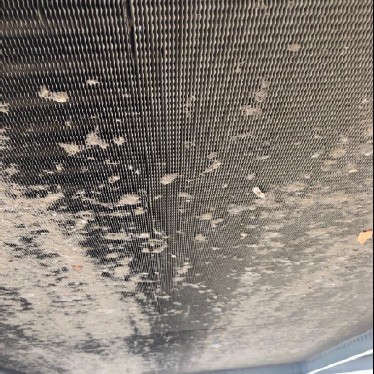
A condenser coil has one job: reject heat. When dirt, grease, pollen and debris pack into the fins, the coil cannot get rid of that heat, so it stays in the system. Head pressure rises. The compressor pulls more current to do the same work. Capacity drops on exactly the days you need it most.
The U.S. Department of Energy has put the cost of a dirty condenser coil at up to 30 percent higher compressor energy consumption. That is not a maintenance line item. That is a percentage of your electric bill.
The failure mode is worse than the energy waste. Compressors running at elevated head pressure for years do not last as long, and compressor replacement is a capital event that arrives without warning, usually during the first heat wave of the season.
Water only, and why that matters
Most HVAC coil cleaning relies on chemistry. Foaming cleaners, acids and detergents dissolve buildup, and then you deal with the residue, the runoff and whatever the chemical did to the aluminum fins and copper tubing over time.
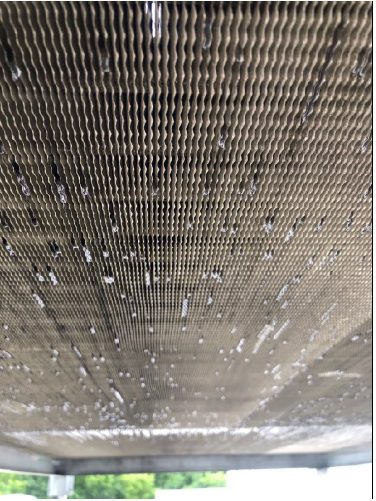
Our process uses moderate pressure and high flow to flush contaminants out of the coil with water alone. High volume moves debris out rather than driving it deeper into the coil pack, which is what high pressure with low flow does. It cleans the full depth of the coil, not just the face.
No chemical residue. No disposal problem. No fin damage from a pressure washer in the wrong hands. And it works in facilities where chemical cleaning is restricted, which covers a lot of food processing, pharmaceutical and healthcare sites.
Cleaning condenser coils on a regular schedule is one of the highest-return maintenance items on any refrigeration or air conditioning system, and one of the most consistently deferred.
What it delivers
- Lower compressor energy consumption and lower operating cost
- Reduced risk of compressor failure from sustained high head pressure
- Restored capacity on systems that have been struggling
- Fewer emergency service calls and less overtime labor
- Longer equipment life across the refrigeration circuit
Who we work with
We work with facilities that depend on reliable refrigeration and cooling to protect products, control operating costs, and keep critical operations running. From grocery stores and food processing plants to manufacturing facilities and commercial buildings, we clean the systems that work hardest.

Grocery and food retail
Supermarket refrigeration racks run constantly, live outdoors, and represent one of the largest energy loads in the store.

Food processing and cold storage
High-load refrigeration in dusty, high-throughput environments fouls fast and matters enormously to product integrity.

Manufacturing and industrial facilities
Process cooling and air-cooled condensers in plant environments take on airborne contamination that ordinary maintenance does not keep up with.

Commercial buildings and rooftop units
Office buildings, retail centers and institutional facilities running fleets of RTUs where nobody has been on the roof in a while.
Why choose us
Water-only cleaning is why clients choose us.
It lets us take on commercial HVAC coil cleaning of any size, in environments where chemicals are not an option, without leaving anything behind in equipment your people work next to. Controlled pressure, high flow, and technicians who know the difference between cleaning a coil and bending its fins flat.
FAQS
Questions About Condenser Coil Cleaning
How often should commercial condenser coils be cleaned?
Annually is the minimum for most commercial equipment. Coils in high-fouling environments, including restaurant rooftops, food processing plants, dusty industrial sites and locations with heavy pollen, often need twice-yearly or quarterly cleaning. Grocery refrigeration racks are commonly on a twice-yearly schedule.
Does a dirty condenser coil really increase energy costs?
Substantially. The U.S. Department of Energy has cited up to a 30 percent increase in compressor energy consumption from a dirty condenser coil. Restricted airflow and reduced heat rejection raise head pressure, and the compressor draws more power for every hour it runs.
Can condenser coils be cleaned without chemicals?
Yes. Our process uses moderate pressure and high water flow to flush contaminants out of the coil without chemical cleaners. The high flow rate is what carries debris out of the coil pack rather than pushing it further in.
Will pressure washing damage my coils?
It can, and it frequently does. High pressure applied incorrectly bends the aluminum fins closed, which permanently restricts airflow and leaves the coil worse than it was. Our process is built around flow volume rather than raw pressure, specifically to avoid that.
What are the signs a condenser coil needs cleaning?
Higher than normal head pressure, longer compressor runtime, reduced cooling capacity on hot days, rising energy consumption with no change in load, visible debris in the fins, and short cycling or high-pressure trips.
Do you clean rooftop units?
Yes. Rooftop condensers and RTUs are a large part of our work, including multi-unit fleets across single sites and multi-site portfolios.
How much does commercial condenser coil cleaning cost?
It depends on unit count, coil size, fouling condition and roof or site access. Send us the details and photos through the quote form and we will give you a real number.
Do you provide documentation of the cleaning?
Yes. Every unit is documented, including its condition and any deficiencies we find. Clients use these records for internal maintenance files, capital planning, audits and utility rebate submissions.