

Refrigerated Display Case Cleaning
Lower Energy Consumption
Clean heat transfer surfaces improve system efficiency.
Reduced Operating Costs
Use less energy and extend equipment life.
More Sustainable Operations
Lower energy use means a smaller environmental impact.
Reliable Performance
Keep your cooling systems running at their best.
An open refrigerated display case is a difficult piece of equipment to keep clean, and most of them are not.
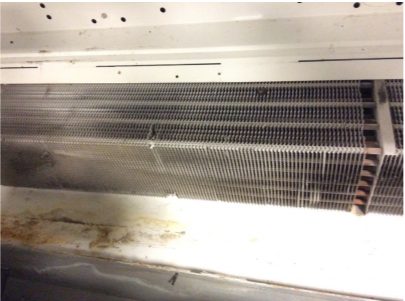
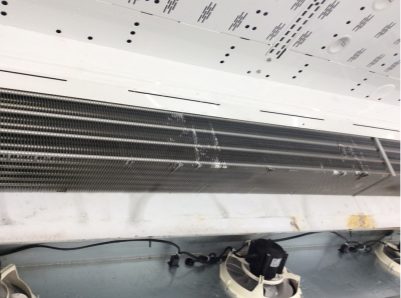
Product debris drops into the base. Moisture collects. Air circulates continuously across the coil and through the case, and the parts that need cleaning most are the parts nobody can see without pulling the case apart. Meanwhile the surfaces that do get wiped down are the ones customers touch.
Underneath the display deck, a neglected case cooler becomes a place bacteria grow, sitting directly beneath produce, deli and dairy that customers pick up and take home.
It is also costing money. The same buildup that creates the sanitation problem fouls the evaporator coil, so the case works harder to hold temperature, uses more energy and holds temperature less reliably. In a store with dozens of cases running around the clock, that adds up fast.
What it delivers
- Removes conditions that support bacterial growth beneath the display deck
- Lower refrigeration energy costs and better return on equipment
- Reliable case temperature, which protects product and reduces shrink
- Protects customers and staff, and protects the store from a food safety finding
- Documented cleaning records for food safety programs and audits
Our process
We clean the case properly, which means reaching the coil, the drain and the areas beneath the display deck rather than wiping down the parts that show. Water-only cooler cleaning, no chemical residue anywhere near food product, and documentation of what we found.
Who we work with
We work with retailers and food service operations that rely on refrigerated display cases to keep products safe, fresh and at the right temperature. From supermarkets and specialty food retailers to institutional dining and food processing facilities, we help keep display refrigeration clean, efficient and reliable.

Supermarkets and grocery chains
Produce, dairy, deli and meat cases across single stores and multi-store portfolios.

Convenience and specialty food retail
Smaller footprints where a single case failure takes out a whole category.

Institutional dining and food service
University dining halls, hospital cafeterias and corporate food service running display refrigeration for high-volume service.

Food processing and distribution
Display and holding refrigeration in facilities where temperature control is a documented control point.
Why choose us
This is food-contact-adjacent equipment, and it should be treated that way.
Our water-only process means nothing chemical is introduced anywhere near product. We work around store hours, document what we find, and give you a record you can put in front of a health inspector or a corporate audit.
FAQS
Questions About Walk-In Cooler & Refrigerated Warehouse Cleaning
What is a case cooler?
A refrigerated display case, the open or glass-door units in a grocery store holding produce, dairy, deli, meat and beverages where customers can reach them. They run continuously and are among the hardest refrigeration equipment in the store to keep genuinely clean.
How often should refrigerated display cases be cleaned?
Store staff typically clean visible surfaces on a routine schedule. Deep cleaning that reaches the coil, drain and areas beneath the display deck is a separate job, commonly done annually or twice a year. In practice it is one of the most deferred tasks in the store.
What grows in a neglected display case?
Product debris and standing moisture in a cool, dark, enclosed space support bacterial and mold growth. Because this sits directly beneath food product customers handle, it is a sanitation concern as well as an equipment one.
Does case cleaning affect health inspection results?
It can. Refrigeration equipment condition, temperature control and sanitation are all inspection considerations. Documented deep cleaning demonstrates the store is maintaining equipment that routine wipe-downs do not reach.
Why is my display case not holding temperature?
A fouled evaporator coil is a frequent cause. Buildup restricts airflow and heat transfer, so the case runs longer and eventually cannot reach setpoint. Blocked drains, defrost problems, damaged air curtains and overloading past the load line are also common.
Do you work around store hours?
Yes. Most of this work happens overnight or during low-traffic periods so sales floor operations are not disrupted.
Can you service multiple store locations?
Yes. We work with multi-site grocery and retail clients and provide consistent documentation across every location.