
Energy Efficient Commercial HVAC Starts With Clean Equipment
The cheapest efficiency upgrade is the equipment you already own, running clean.
Lower Energy Consumption
Clean heat transfer surfaces improve system efficiency.
Reduced Operating Costs
Use less energy and extend equipment life.
More Sustainable Operations
Lower energy use means a smaller environmental impact.
Reliable Performance
Keep your cooling systems running at their best.
Clean Equipment Runs More Efficiently
Most advice about energy efficiency in commercial buildings starts with replacing something. New chillers, new rooftop units, variable speed drives, controls upgrades. All of it works, and all of it is a capital project with a multi-year payback and a procurement process attached.
Cleaning the equipment you already have is the least glamorous item on that list and frequently the fastest payback on it.
HVAC energy efficiency is not only a question of what equipment you own. It is a question of what condition that equipment is in.
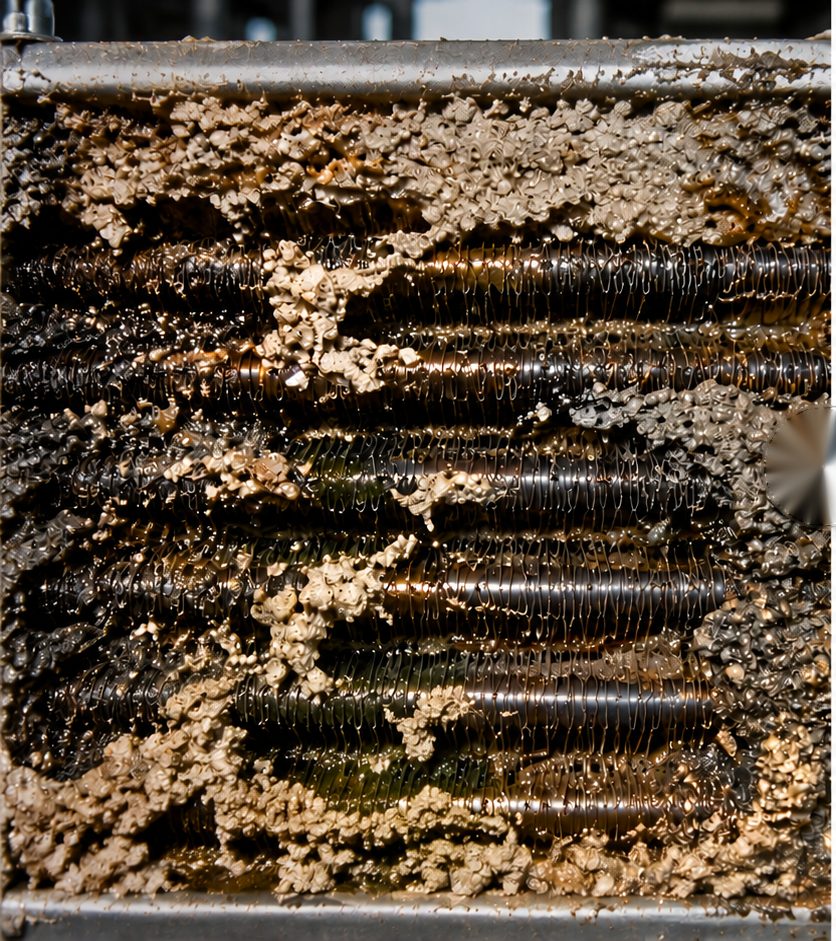
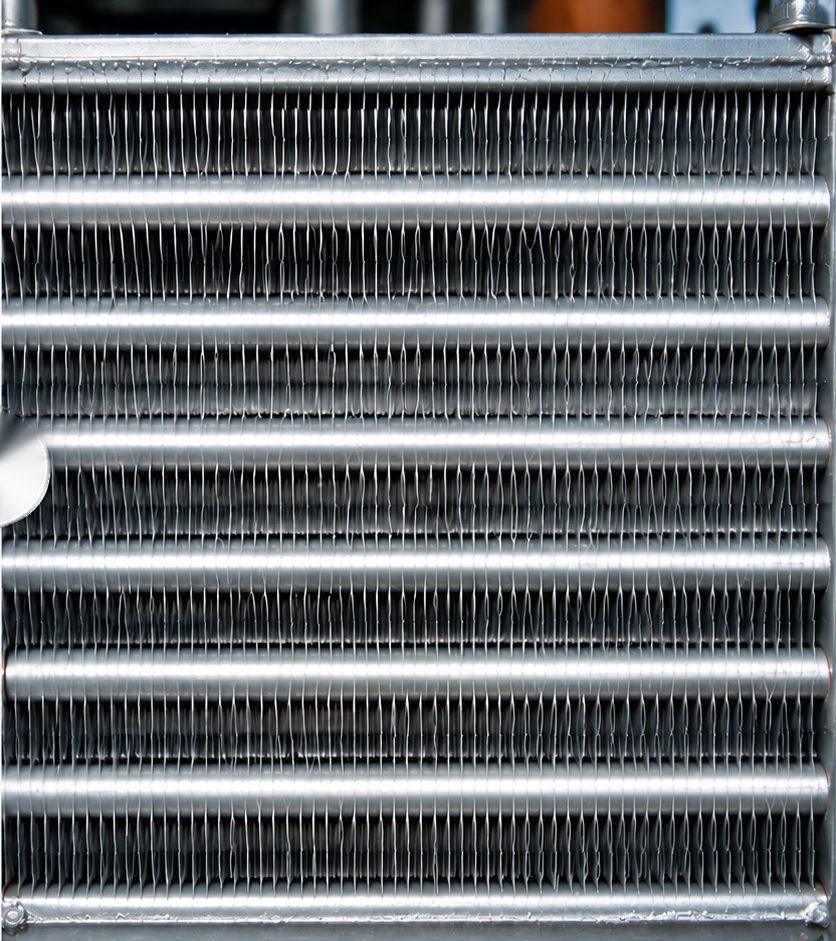
Every heat transfer surface in your plant was engineered to move a specific amount of heat. Anything coating that surface is insulation. The system compensates by running longer and drawing more power, and it does this quietly, for years, without setting off a single alarm.
Where the energy actually goes
Condenser coils
The U.S. Department of Energy has put the cost of a dirty condenser coil at up to 30 percent higher compressor energy consumption. Restricted airflow raises head pressure, and the compressor draws more current every hour it runs.
Cooling towers
A clean tower delivers colder water to the chiller. Published industry figures generally put chiller efficiency improvement at roughly 1 to 1.5 percent per degree Fahrenheit that entering condenser water drops below full load design, and closer to 2 percent per degree when entering water is above 85F. Cooling tower energy efficiency compounds across every operating hour.
Chiller and condenser tubes
Scale and biofilm on tube walls widen approach temperature and cost tonnage. Published figures put recovery from cleaning a lightly fouled machine at roughly 1 to 3 percent, and close to 10 percent on a heavily fouled one.
Evaporator coils and air handlers
A loaded coil restricts airflow and drags down heat transfer, so the system runs longer to deliver less conditioned air.
Refrigeration systems
In a grocery store or cold storage facility, refrigeration is typically among the largest electrical loads on the building. Fouled evaporators extend runtime across every hour of operation.
Utility rebates and efficiency programs
Utility programs across the Northeast offer incentives to facilities that reduce consumption, and energy efficient HVAC systems for commercial buildings are a common target. Work like this generally falls under custom or retro-commissioning incentives rather than standard equipment rebates, and eligibility and amounts vary by utility and change from year to year. Check with your provider on specifics.
What does not vary is the documentation requirement. These programs need proof the work was actually performed, and that is where most facilities get stuck. We provide that documentation as a standard part of every job, which is why customers call us for reports on work completed months earlier.
Efficiency you can document
Energy savings that cannot be demonstrated are difficult to fund and impossible to claim.
Energy efficient commercial HVAC systems only stay efficient if somebody maintains them, and the record of that maintenance is what makes the savings provable.
Our reports document what was cleaned, the condition it was in and the work performed. Facilities use them to justify the spend internally, support rebate submissions, and build the maintenance history that makes the next budget request easier to approve.
Find out what your equipment is costing you.
Tell us what you are running and when it was last cleaned. We will tell you what we would expect to find.
FAQ
Answers to Your Energy Efficiency Questions
How much energy can cleaning actually save?
It depends on how fouled the equipment is and how many hours it runs. The U.S. Department of Energy has cited up to 30 percent higher compressor energy consumption from a dirty condenser coil. Chiller tube cleaning recovers roughly 1 to 3 percent on a lightly fouled machine and close to 10 percent on a heavily fouled one. Equipment that has never been properly cleaned is where the largest gains are.
Is cleaning cost effective compared to equipment upgrades?
It is usually the fastest payback available, because it restores performance you already paid for rather than buying new capacity. It is not a substitute for a genuine upgrade when equipment is at end of life. It is what you do first, and what makes the case for the upgrade more accurate when the time comes.
Do utility rebate programs cover cleaning?
Some do, generally through custom or retro-commissioning incentives rather than prescriptive equipment rebates. Program rules vary by utility and change year to year, so confirm with your provider. All of them require documentation that the work was performed, which we supply on every job.
How do we measure the savings?
The most practical indicators are chiller approach temperature against the machine baseline, kW per ton, condenser water temperatures before and after, and compressor runtime. Most facilities already have this data in their building management system and have never trended it against maintenance dates.
How quickly does cleaning pay for itself?
For equipment that runs most of the year and has not been cleaned recently, payback is commonly measured in months rather than years. The variables are fouling severity, run hours and your electricity rate.
Does cleaning help with capacity, not just cost?
Yes, and this is often the more urgent issue. A fouled system cannot make its rated capacity on a design day. Facilities that struggle to hold setpoint during a heat wave frequently do not have an undersized plant. They have a dirty one.
What is the single biggest energy waster you see?
Condenser coils that have never been properly cleaned, on equipment running for years. It is the most common finding and usually the largest single recovery on the site.